Speakers
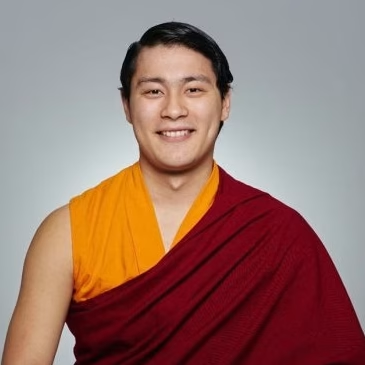
H.E. Avikrita Vajra Sakya Rinpoche
Sakya Monastery
His Eminence Avikrita Vajra Sakya Rinpoche was born in Seattle in 1993 and trained from childhood in India under the guidance of his late grandfather H.H. Jigdal Dagchen Sakya, H.H. the 41st Sakya Trichen, H.H. the Dalai Lama, and many great masters. After completing over a decade of rigorous study at Dzongsar Institute, advanced retreats, and tantric training, he now shares the Dharma worldwide with clarity and warmth.་Rinpoche is Head Lama of Sakya Monastery in Seattle and oversees affiliated centers in India and Asia. He founded the Marici Fellowship for global community service and the Bhadracarya Foundation in Nepal for annual Buddhist activities in Lumbini. He is also the author of “Wake Up to What Matters,” published by Shambhala Publications.
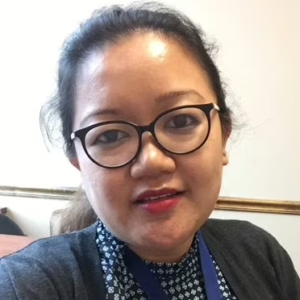
Dawa Choezom
Chartered Accountant, KPMG
Dawa Choezom is a chartered accountant with 12 years of experience in audits. She currently works as an associate director at BSR & Co. LLP, Chennai (KPMG). Previously, Choezom worked at KPMG Global Solutions Group – Audit (KGSG) in Berlin, Germany, for two years.
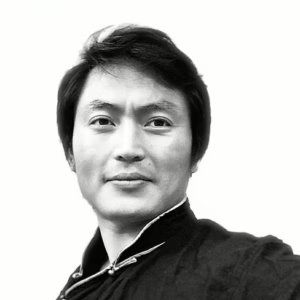
Tenzin Choephel
Founder, Loplao (EasyTibetan)
Tenzin Choephel was born in Tibet and left his homeland at a young age. Upon arriving in India he enrolled in Drepung Monastery. Throughout his adulthood, Choephel has taught the Tibetan language in India and the United Kingdom (UK), including Thosamling Nunnery in Dharamsala, the School of Oriental and African Studies (SOAS), the University of London, and the University of Oxford. Inspired by his own experience of teaching, Choephel developed and published the Tibetan language textbook, “The Manual of Authentic Tibetan” in 2018. He is a co-founder of Tib Shelf and the founder and director of Loplao (easytibetan). In his free time, he can often be found playing basketball and pool with his friends. Choephel is a graduate of the College of Higher Tibetan Studies, University of Edinburgh and the University of Oxford.
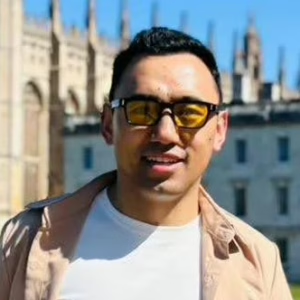
Dr. Darig Thokmay
Research Fellow, University of Cambridge
Dr. Darig Thokmay is a research fellow at the University of Cambridge, where his research focuses on the social, cultural, and political history of Inner Asia (Tibet, Mongolia and China) in the early modern period. He writes for both academic audiences and the general public. Dr. Thokmay completed his PhD at the University of Oxford.
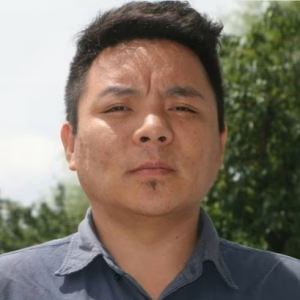
Sangyal Kunchok
Researcher, ICT
Sangyal Kunchok is a researcher with the International Campaign for Tibet (ICT). He began his journey in exile after completing middle school in Tibet. A journalist by training, Kunchok most recently worked with Radio Free Asia (RFA) before joining ICT. From 2018 to 2021, he worked as an assistant editor and journalist with Tibet Times. Kunchok received his bachelor’s degree in Tibetan literature from the Dalai Lama Institute for Higher Education.
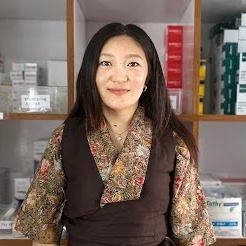
Sherab Tsomo
Mental Health Professional, CTA
Sherab Tsomo is a mental health professional. Since April 2021, she has been serving as the South Zone Tele-psychiatry Project Coordinator, a community-based mental health initiative under the Central Tibetan Administration’s Department of Health. In this role, she coordinates mental health services for the Tibetan community, which involves raising mental health awareness and providing counselling and psychiatric care. Tsomo began her journey in the mental health field working with the Tibetan Medicine Buddha as a therapist, where she gained valuable experience supporting individuals through traditional and modern approaches. She later volunteered as a counselor at Kunphen Rehabilitation Centre, providing guidance and support to individuals recovering from substance use and related challenges. Tsomo received her master’s degree in clinical psychology from Chandigarh University and is a graduate of the Dalai Lama Institute for Higher Education and Upper TCV.
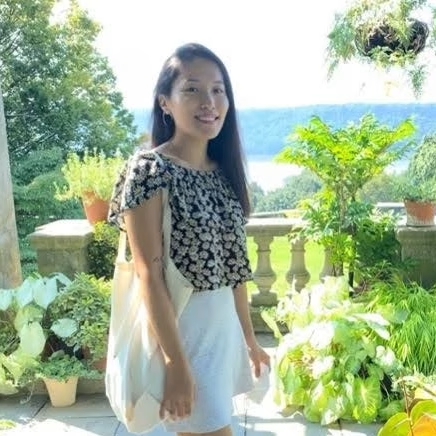
Dr. Yewong Tenzin Dongchung
Post-doctoral Fellow, Brown University
Dr. Yewong Tenzin Dongchung is a historian specializing in material culture studies and history of print technology in East Asia during the early modern period. Her research examines the expansion of woodblock printing houses in Tibet, Sino-Tibetan borderlands, and Buddhist spaces in Qing China (1644-1911), with the particular focus on artisans and artisanal knowledge. At present, she holds a postdoctoral fellowship at Brown University’s History Department. Yewong received her PhD training in East Asian History at Columbia University in 2024. Originally from TCV, she completed her high school at United World College of the Atlantic on a Tibetan government scholarship and later pursued her undergraduate degree at Wellesley College.
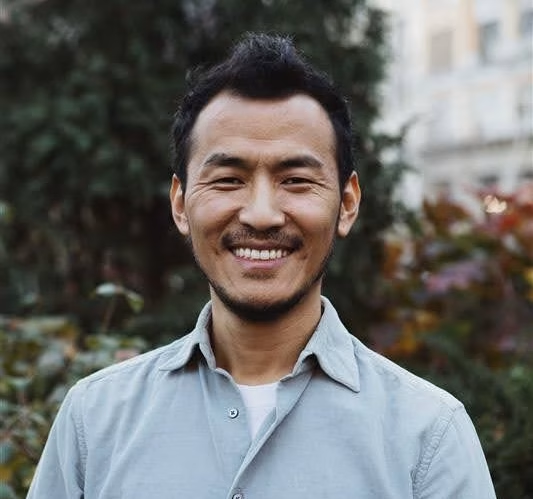
Tenzin Nyandak
Founder, Studio Nyandak Architecture and Engineering
Tenzin Nyandak is a licensed architect and structural engineer. He is the founding principal of Studio Nyandak, a multidisciplinary design practice based in New York City and Dharamsala, India. He is deeply committed to safeguarding cultural heritage, supporting authentic architectural identity, creativity in structural engineering, and supporting the younger generation of architects and engineers. In addition to directing architectural and engineering projects at both offices, Tenzin collaborates with scholars and experts across disciplines on research projects that support the wider field of Tibetan heritage preservation. Prior to starting Studio Nyandak, he was an associate at Caples Jefferson Architects and in 2015, he was named the Robert Silman Fellow for Preservation Engineering.
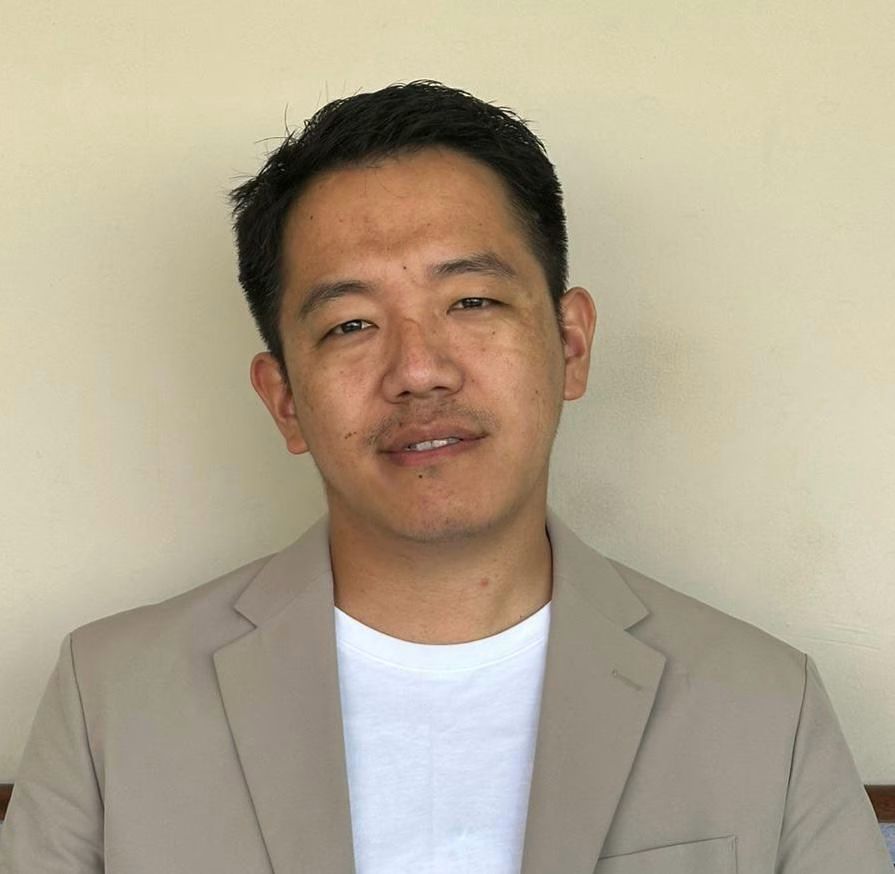
Dr. Ugyan Choedup
Historian and Lecturer, Yale University
Dr. Ugyan Choedup is a historian of modern Tibet and China, focusing on the questions of identity, nationalism and colonial modernity. He completed his schooling in Tibetan refugee schools in India and earned M.Phil degrees from Jawaharlal Nehru University, New Delhi. He received my Ph.D. in History from Pennsylvania State University with a dissertation titled “Tibet’s Winding Road: Modernity, Nationalism, and Unsettled Exile.” His dissertation traces the genealogy of contemporary nationalist discourse among exiled Tibetans. He is currently a Postdoctoral Associate and Lecturer at the Council on East Asian Studies, Yale University. In addition to his research, he co-hosts Khyeltam, a Tibetan language podcast on ideas, histories, and current affairs.
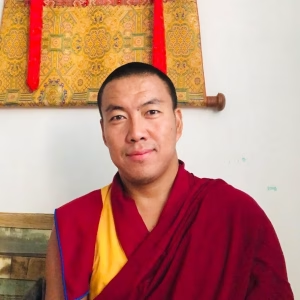
Geshe Tenzin Tselek
Lecturer, Sarah College for Higher Tibetan Studies
Geshe Tenzin Tselek is currently working as a lecturer at Sarah College for Higher Tibetan Studies since 2017 as a Buddhist Philosophy teacher. He is also a certified L1 SEE Learning facilitator, training honoured by Emory University. He completed his graduation from Upper TCV school in 2001. He received monastic ordination and joined the Institute of Buddhist Dialectics where he completed the 16 years course of Intense Buddhist Philosophy in 2017. He later received the Geshe Degree from Drepung Loseling Monastery in 2019.
Geshe Jamphel Dorjee
Lecturer, Sarah College for Higher Tibetan Studies
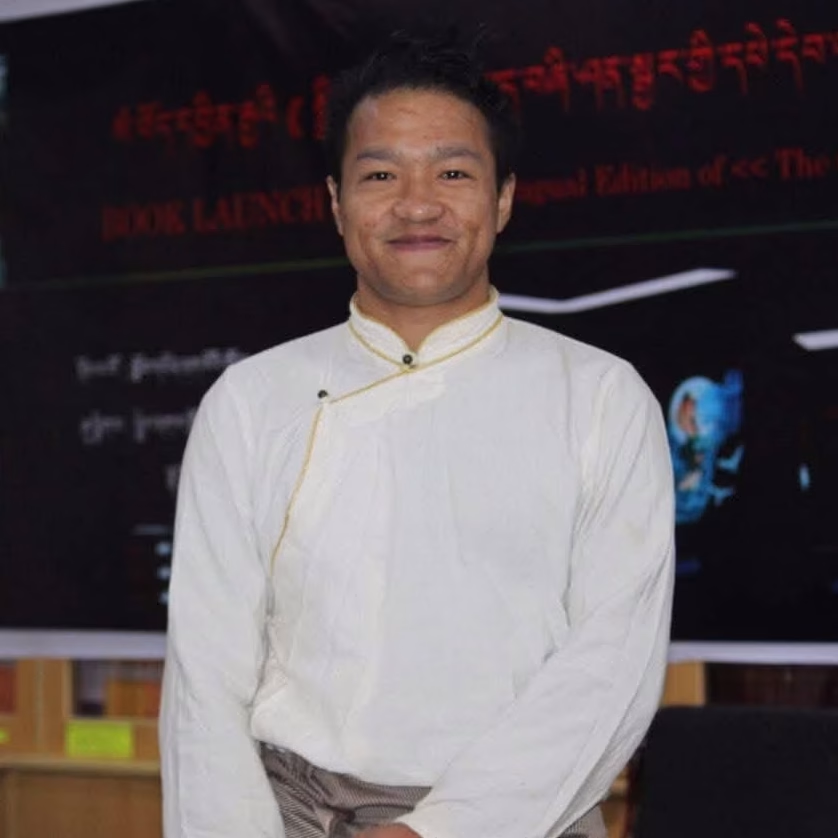
Ngawang Yiknyen
Director, Norsang Bookstore
My name is Ngawang Yiknyen. I arrived in India in 2006. Until 2015, I studied at Drepung Loseling Monastery. I graduated with a Rabjampa degree in Parchen. From 2016 to 2018, I studied at Norling College. From 2018 to 2019, I worked as a literature and grammar teacher at Sakya Madgon. I have written about seven books. I have been an editor for several websites and magazines. I attended conferences organized by the Tibetan Policy Research Institute and presented papers. I have participated in and presented papers at several Tibetan studies conferences in India, higher education student conferences, and non-sectarian scholars’ conferences. From 2018 to 2021, while studying at Dzongsar Institute, I also worked as a literature and grammar teacher at Drikung Monastery. Since 2021, I have been the director of Norsang book shop in Nepal.
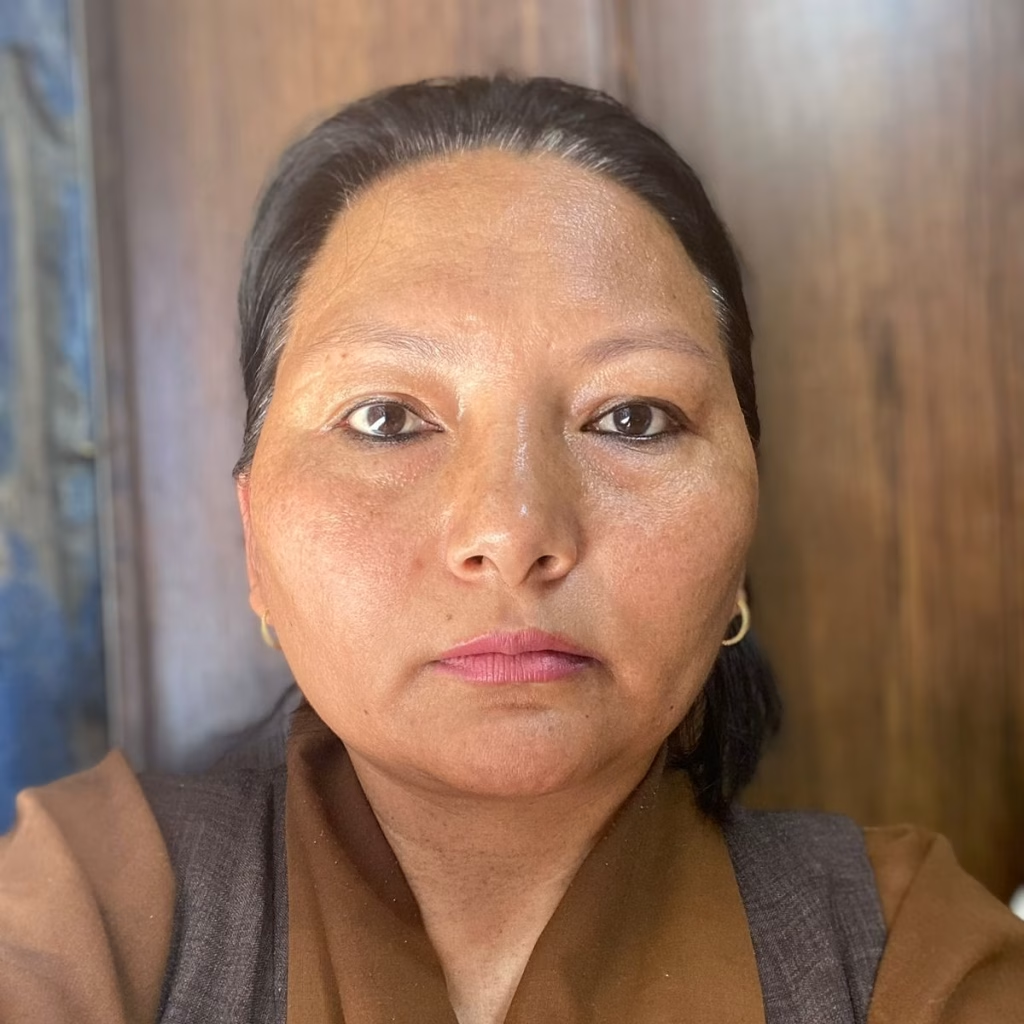
Delek Wangmo
Director, Tibetan Ability Center
Delek Wangmo is a trained Special Educator and Director of the Tibetan Ability Center (TAC) based in Mcloed Ganj, Dharamshala. In this role, she works to provide equitable, respectful and dignified life to people with disabilities. TAC strives to create an inclusive community through education, health, advocacy and awareness-raising activities in the exile Tibetan community living in India. After completing her post graduate diploma in special education, Wangmo worked at the CTA-administered Ngoenga Special School for Tibetan Children with Special Needs in Dehradun, India, from 2005 to 2015. Since 2015, she has been leading the TAC team.
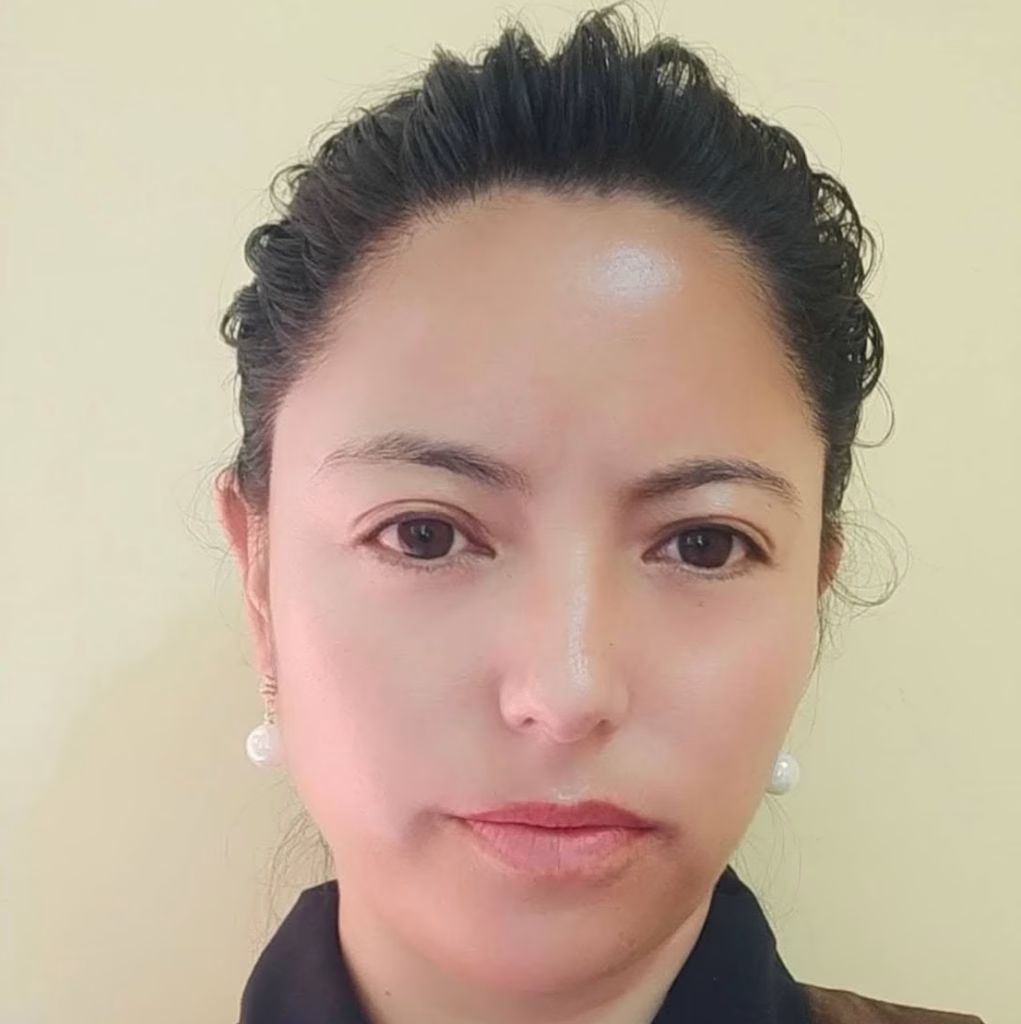
Gaga Gyaltsen Choekyi
Chinese Teacher, Norling College
Gagya Gyaltsen Choekyi was born in Amdo, Nagchu. She completed her elementary school, junior high school, and high school in Amdo County and Nagchu City. She is also a graduate of Lhasa Normal College. In 2009, Choekyi arrived in India and joined the Institute of Wisdom and Joy. She then studied Tibetan grammar, poetry, history, computer and English languages, at the Gelden Choeling Nunnery. Her study also included the five major treatises of Gelug lineage. Choekyi also participated in and presented her work at numerous conferences. This includes a paper on the protection and development of the Tibetan language at the Library of Tibetan Works and Archives and presentations at the Tibetan Higher Education Conferences and Tibetan Studies Conferences at Sarah College. In 2025, she was invited as a guest speaker at the launch ceremony of the book, “The Highly Elevated Ecological Relocation Project in Tibet,” at the Tibet Policy Institute. In addition, Choekyi participated in many kinds of training, including science training. She has taught Chinese to nuns at Gelden Choeling Nunnery and online Chinese classes to many Tibetan students living in the East and the West. Since 2022, she has been working as a Chinese teacher at Norling College.
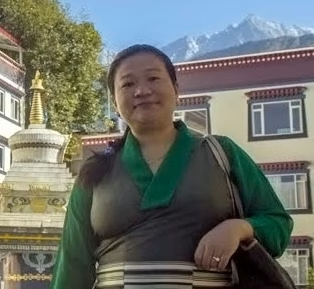
Tenzin Pema
Director General, Education Council Secretariat, CTA
In May 2011, I was selected as a civil servant at the level of Deputy Secretary in the Tibetan Administration. For the first six years, I worked as a researcher at the Tibetan Policy Research Institute, focusing on the state of education in Tibet, particularly the condition of the Tibetan language. In May 2017, I moved to the Department of Education, where I took responsibility for formulating the basic education policy for Tibetans in exile and overseeing various projects related to secular ethics. In April 2021, I was appointed by the Cabinet as the Director General of the Education Council Secretariat, a position I continue to hold. Alongside this role, I also serve as the coordinator for SEE Learning Education. For my schooling, I attended Manipal Day School and Dalhousie Tibetan School, followed by St. Joseph’s College, Darjeeling, for higher education. I graduated from Loyola College of Education, Sikkim. Professionally, I taught at Suja Tibetan Homes School for more than three years and later worked with Khawa Karpo Tibetan Cultural Service for about three years.
Tsering Yangchen
Architect, Studio Nyandak
Tsering Yangchen graduated from the Indo Global College of Architecture in Punjab, India. Tsering is a native of Purang, in Western Tibet. She joined TCV Gopalpur school when she was 7 years old. As the first member of her family to pursue higher education, Tsering takes great pride in the opportunity to work with Studio Nyandak. At Studio Nyandak, she is working on multiple pro-bono projects in and around Dharamsala.
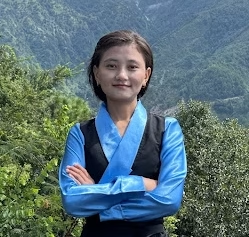
Lhakpa Dolma
Architect, Studio Nyandak
Lhakpa Dolma was born in Tibet. Like other members of the Studio Nyandak team, she was educated at TCV boarding schools, where her passion for drawing, sketching, and science began to take shape. She went on to earn a bachelor’s degree in architecture from Lovely Professional University (LPU). Now a practicing architect, Lhakpa is committed to preserving and celebrating Tibetan culture through innovative design and research.
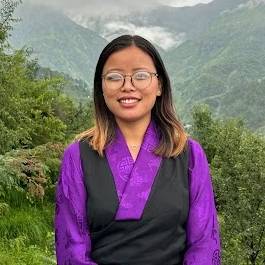
dechen Tsogyal
Engineer, Studio Nyandak
Born in central India, Dechen Tsogyal moved to Dharamshala as a child to attend the upper TCV boarding school. She completed a bachelor’s degree in civil engineering at Government Engineering College of Bilaspur, before working as a junior engineer in South India, where she managed the labor, materials, and construction flow on a 3-story monk’s quarters and residence house. At Studio Nyandak, she makes sure that the technical components and details are precise, complete, well-coordinated, and clearly presented.
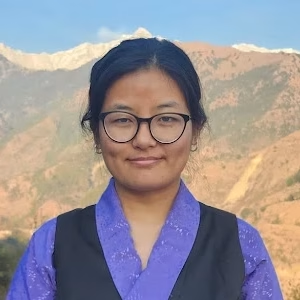
Gangchen Dolma
Research Associate and Manager, Studio Nyandak
Born in Eastern Tibet, Gangchen Dolma moved to India in 2006 and joined TCV Chauntra for primary schooling. She subsequently completed a B.Sc. in Physical Science and a Masters of Operational Research from Delhi University. She has a keen interest in data analysis and decision-making strategies. At Studio Nyandak, Gangchen works on research projects and makes sure the office runs smoothly.
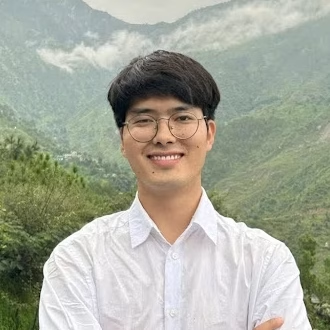
Passang Tashi
Architect, Studio Nyandak
Passang Tashi was born in eastern Tibet. He was educated at TCV boarding schools. He earned a bachelor’s degree in architecture from Christ College in Bangalore. Now, as a professional architect, he aims to preserve the rich and diverse Tibetan culture through thoughtful architectural design and research work.
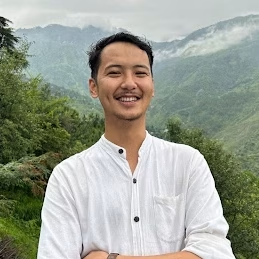
Tenzin Choeyang
Engineer, Studio Nyandak
With a clear understanding of construction processes and strong interpersonal skills, Tenzin Choeyang works collaboratively to ensure projects are completed on time and within budget. Tenzin has worked on a range of projects, including stupa, cabins, and group housing, and has served as a site engineer for the Central Tibetan Administration. Tenzin holds a Bachelor of Civil Engineering from Lovely Professional University. He is fond of cars and cabins and enjoys gardening and playing soccer.
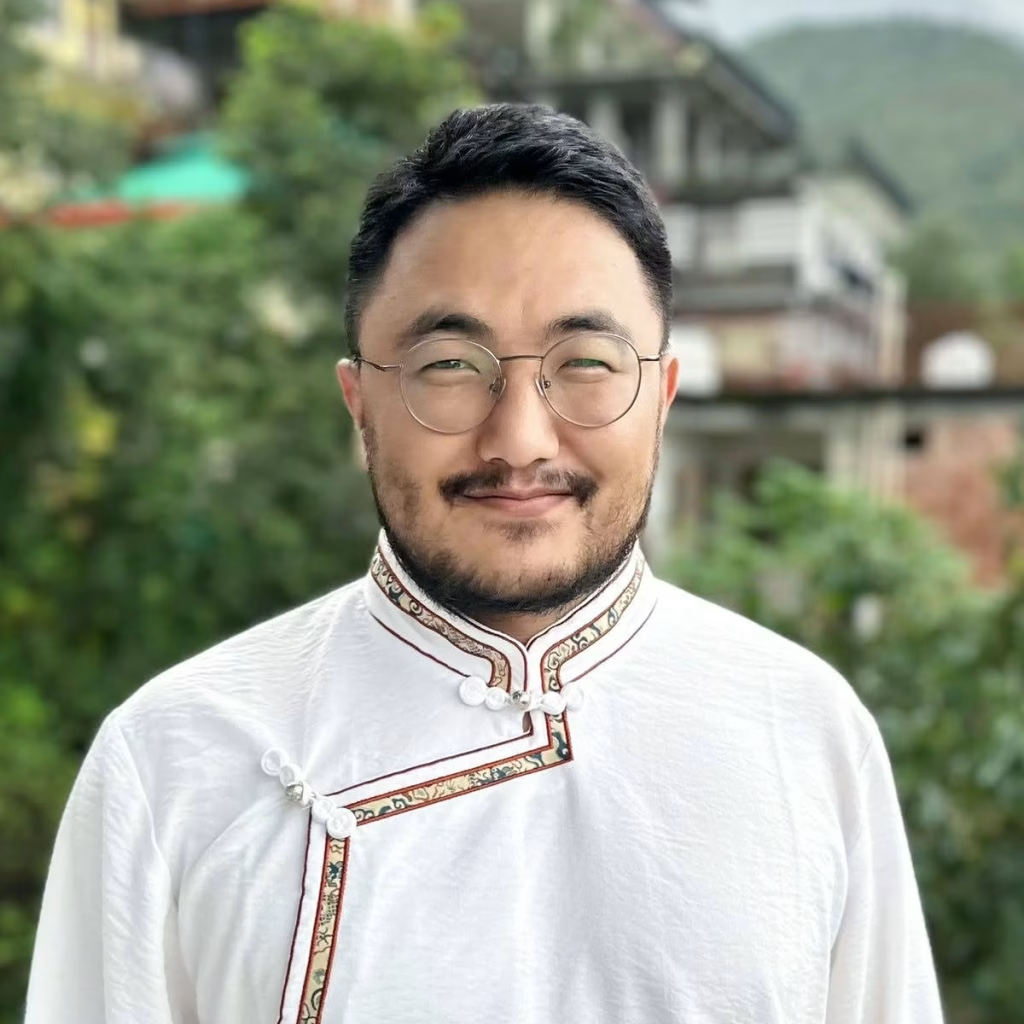
Pema Tsewang
Prajñāpāramitā Candidate, Institute of Buddhist Dialectics
Pema Tsewang is currently studying Prajñāpāramitā in a traditional setting at the Institute of Buddhist Dialectics (IBD). He holds both bachelor’s and master’s degree in French and Francophone Studies from Jawaharlal Nehru University (JNU). His interest in Buddhism deepened during nearly two years of study at the School of Snowland Tibetan Studies at Gyume Tantric Monastery, which led him to pursue three additional years of Buddhist philosophy at Sarah College for Higher Tibetan Studies.
Shede Dawa
Researcher
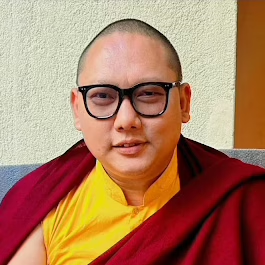
Beri Gyalse
Writer & Tibetan Language Teacher
Beri Palden Namgyal was born in Tibet and arrived in India at the age of seven. He studied at Drepung Loseling Monastery and later worked as a teacher at Varanasi College from 2012-2018. Since 2016, he has been a teaching guide for Tibetan schools and has delivered many teachings and workshops in the United States, Korea, India, Nepal and Bhutan. Beri Gyalse has published about 10 Tibetan books and numerous teaching tools and currently teaches Tibetan online.
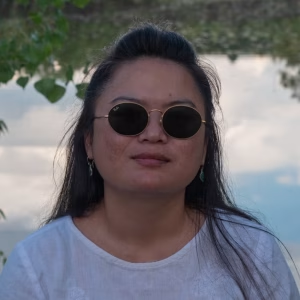
Dr. Dawa Lokyitsang
Anthropologist
Dr. Dawa Lokyitsang is a Tibetan-American anthropologist who studies how Tibetans refuse Chinese state policies in Tibet aimed at erasing their identity, while also building futures in exile. Her research on Tibetan schools in India shows how these institutions, through raising generations of children with a distinctly Tibetan education in Tibetan-constructed environments, actively produce Tibetan worlds—helping communities preserve their identity in foreign lands, strengthen collective life, and foster mutuality grounded in shared loss and shared aspirations for a free and self-determined Tibetan future. She also highlights how care, kinship, and educational practices can be powerful practices for revitalizing anticolonial worlds.
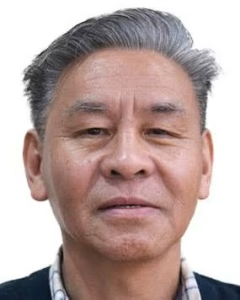
Acharya Sangye Tandar Naga
Head, Tibetan Cultural Research Department , Library of Tibetan Works and Archives (LTWA)
Acharya Sangye Tandar Naga is the head of the Tibetan Cultural Research Department at the Library of Tibetan Works and Archives and the editor of the Department’s Tibetan language journal གཏམ་ཚོགས། He has over twenty years of experience in teaching Tibetan language. He teaches the morning special Tibetan language class and other academic workshops at the LTWA.